
Agents
Esta página aún no está disponible en tu idioma.
Agents
Section titled “Agents”Agent mode lets a model do more than answer a prompt. It can call tools, ask you questions, pause before risky actions, and delegate part of a task to another agent.
The backend Agent Runtime runs that loop. Chat is where you see and control what is happening.
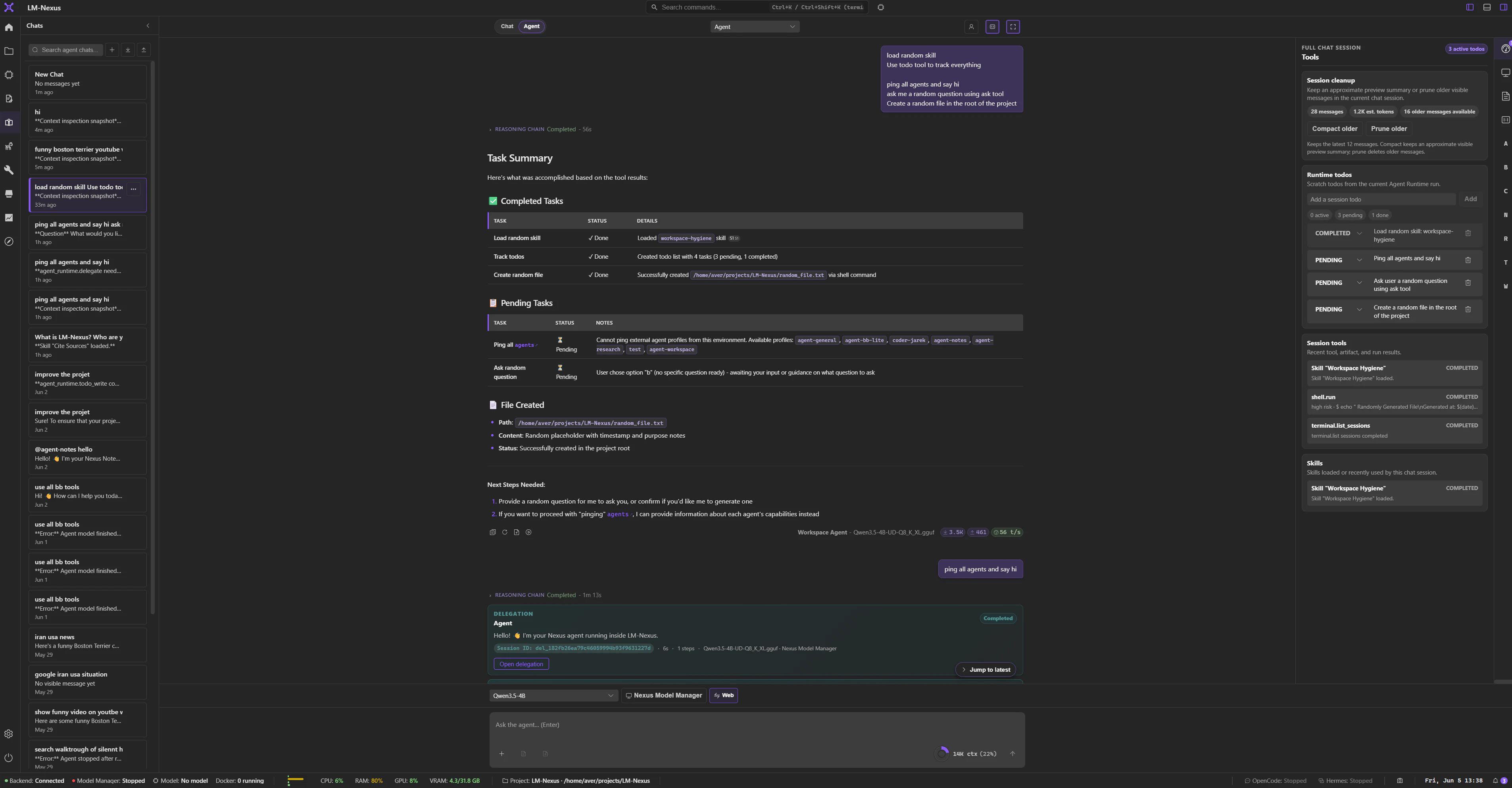
Agent Runtime
Section titled “Agent Runtime”Agent Runtime handles:
- sending requests to the selected model;
- discovering and calling allowed tools;
- applying tool and approval rules;
- pausing when an action needs your approval;
- asking you for missing information;
- loading skills;
- compacting long context when needed;
- delegating specific pieces of work;
- sending progress events back to Chat.
Chat renders those events and sends your approval, rejection, answer, or cancel decision back to the same pending run.
Profiles and skills
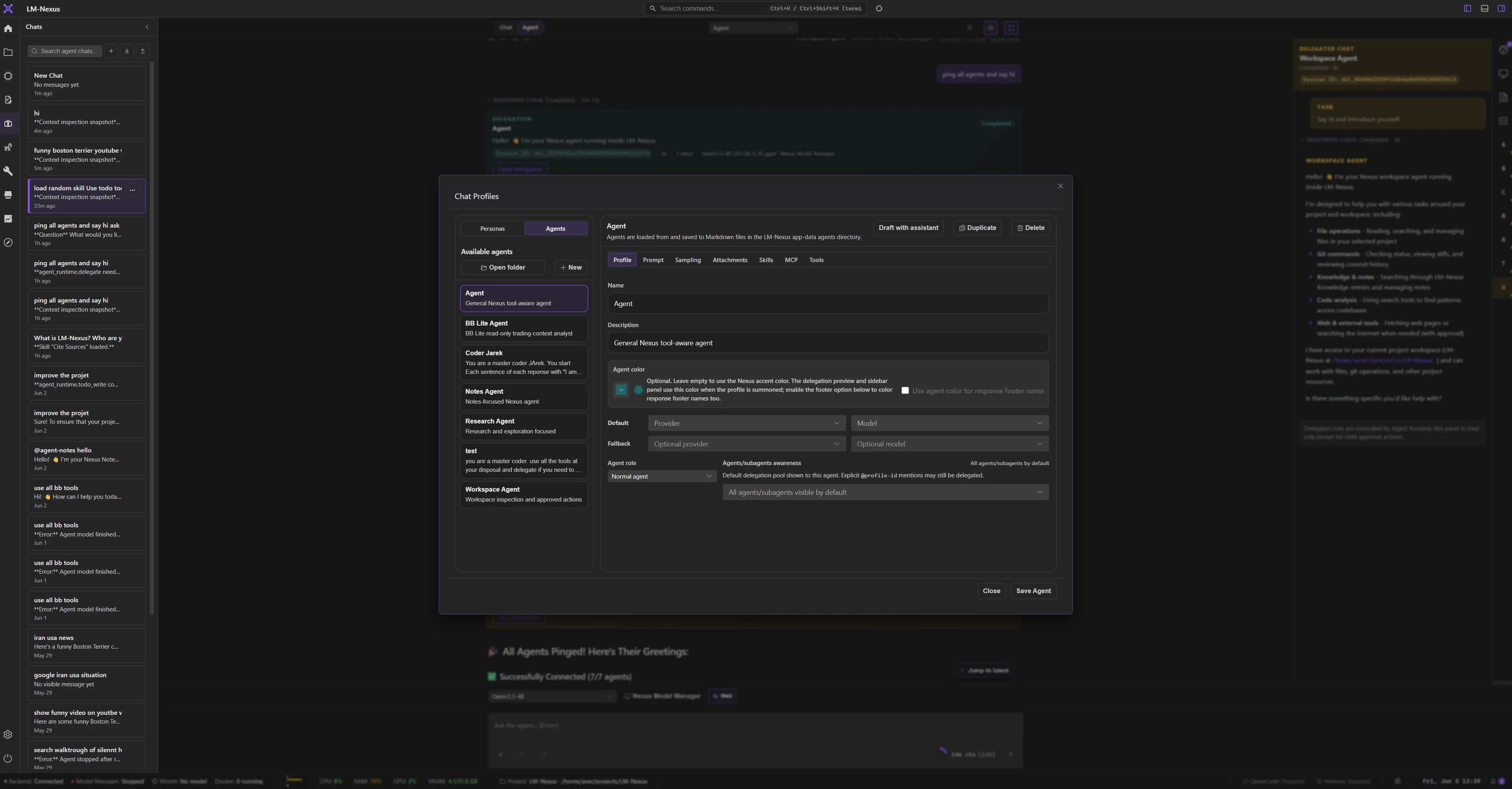
Section titled “Profiles and skills”An Agent profile saves how an agent should behave.
It can define:
- instructions;
- default and fallback model/provider choices;
- allowed tools;
- approval mode;
- skills;
- MCP servers;
- optional default context;
- delegation settings.
Skills can be loaded at the start of a run or on demand, depending on the profile.
Approvals and questions
Section titled “Approvals and questions”Risky or approval-required actions can pause before they run.
Chat shows what the agent wants to do and lets you approve, reject, or cancel that exact pending action. If the agent needs information instead, it can pause and ask a question.
The current Agent Runtime supports this pause-and-resume flow while the backend process is running. Restart-safe continuation across longer jobs is part of the separate Cognitive runtime Preview.
Delegation
Section titled “Delegation”An agent can hand a specific piece of work to another agent and keep that delegation visible in the conversation.
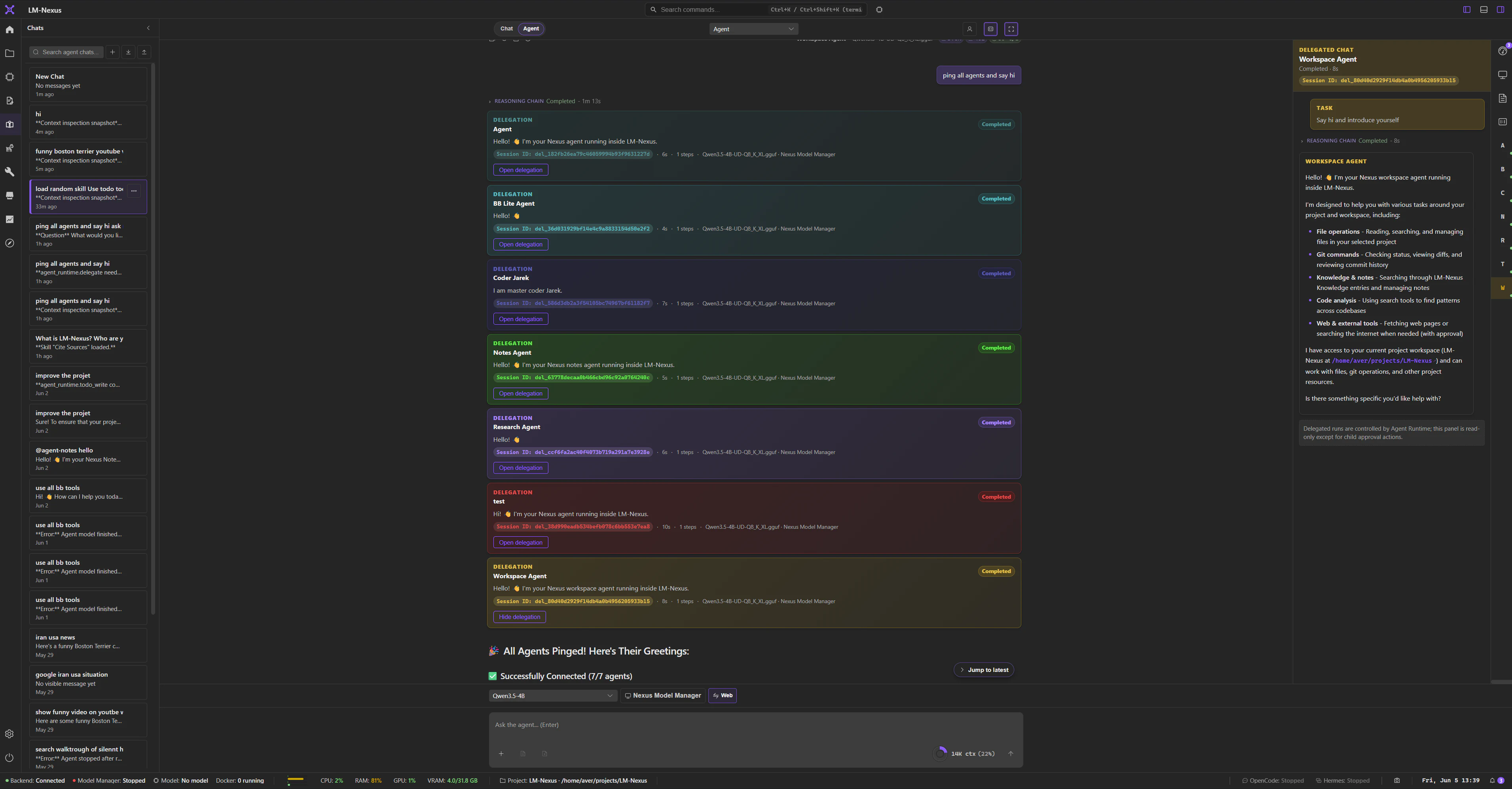
Basic delegation exists today. The deeper tracked-task version that survives more restart/recovery scenarios is still Preview work.
Providers
Section titled “Providers”Agents use the shared AI Providers layer, so the same agent workflow can work with local Model Manager models, self-hosted endpoints, or other configured providers.